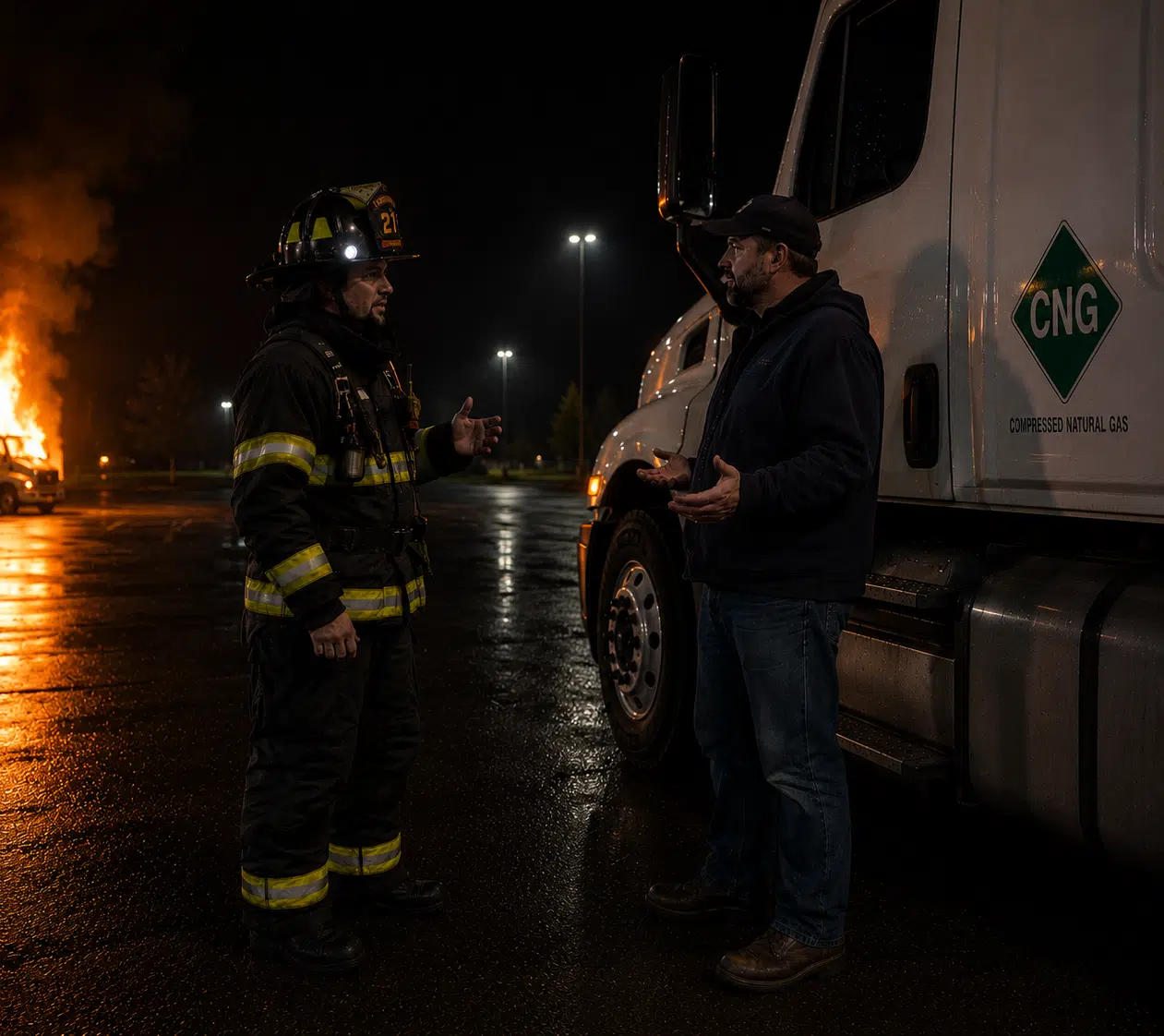
Incidents involving alternative fuel vehicles are rare—but when they occur, they tend to make headlines. In 2024, a CNG vehicle fire injured several responding firefighters. Initial concerns focused on the fuel system, but later findings indicated it had functioned as designed. Still, there are ways CNG safety training, communication, and situational awareness can help prevent similar outcomes.
Understanding What Happened
An investigation revealed that:
- A vehicle fire originated, and the driver observed sparks.
- Emergency dispatch was eventually notified, but the vehicle’s CNG fuel system may not have been clearly communicated.
- First responders arrived without full knowledge of the vehicle’s fuel type.
- Fire suppression efforts using water cooled a pressure relief device (PRD), creating a pressure imbalance which led to a cylinder rupture.
Each step, if handled slightly differently, could have helped mitigate such a severe outcome.
Training Matters Across Every Role
What this incident underscores is not a failure of technology, but a gap in shared understanding.
Safety in alternative fuel vehicles depends on everyone involved:
- Drivers are often the first to recognize an issue and communicate critical details.
- Dispatch personnel relay information that shapes the emergency response.
- Technicians ensure systems are properly installed, inspected, and documented.
- First responders must adapt their approach based on the vehicle’s fuel system.
Why Is Traditional Fire Suppression Ineffective?
Fire suppression strategies used for gasoline or diesel vehicles do not directly translate to CNG systems.
For example:
- Applying water to fuel storage cylinders and the surrounding area renders pressure relief devices ineffective. Cooling CNG cylinders with water can lower temperatures below those required for PRDs to activate, potentially preventing them from functioning as intended.
- Without awareness of a natural gas fuel system, responders may unknowingly introduce additional risk.
This is why CNG emergency response training is critical. It helps responders recognize system components, understand how they behave in a fire or other accident, and choose response methods that prioritize safety.
The Importance of Clear Communication
One of the most preventable aspects of this incident is miscommunication.
If the presence of a CNG system is not clearly and immediately communicated, then dispatch cannot relay accurate information, and first responders cannot adjust their approach.
Clear labeling, proper documentation, and well-trained personnel all contribute to closing this gap. When labeling is damaged or not visible due to the magnitude of a fire, and time is limited, that responsibility falls on the personnel present at the scene.
The Role of the CNG Fuel System
CNG systems are engineered with multiple safety mechanisms, including pressure relief devices designed to prevent uncontrolled cylinder failure.
In this situation, all indications are that the system behaved as intended.
PRDs are specifically designed to release pressure under extreme heat conditions (such as a fire) to prevent a rupture and explosion. However, when external factors affect the system—like cooling from water dispersed by a fire hose—those PRDs may interpret pressure conditions differently.
This does not indicate that CNG is inherently dangerous. In fact, when installed, maintained, and handled properly, CNG is widely regarded as a safe and reliable fuel.
Rare Events, Lasting Impact
Incidents like this are uncommon, but they often receive heightened attention because of their severity. That visibility can sometimes lead to misunderstandings about the safety of alternative fuels. In reality, millions of miles are driven safely every year using them.
The takeaway is that any fuel system requires informed handling, especially in emergency conditions.
Shared Responsibility and Liability
In the event of an accident, responsibility may extend across multiple parties, including vehicle owners and operators, maintenance providers and technicians, organizations responsible for training and oversight, and even those involved in system design or modification.
This shared responsibility reinforces the need for consistent standards, thorough documentation, and ongoing education.
A Culture of Preparedness
To avoid similar outcomes in the future, it’s important to:
- Equip drivers with the knowledge to respond quickly and appropriately.
- Ensure dispatch protocols include confirmation of vehicle fuel type.
- Train technicians to maintain systems to the highest standards.
- Provide first responders with the tools and understanding they need for alternative fuel scenarios.
When these elements come together, they create a system where safety is not left to chance.
Why This Matters
At its core, this is not just a story about a vehicle fire—it reinforces that vehicle safety is only as strong as the preparation, communication, and shared knowledge behind it.
CNG remains a safe, effective fuel when handled correctly. However, like any advanced system, its safety depends on whether those interacting with it are trained and make the right decisions when it matters most.